
How to Organize a Wardrobe in a Functional and Durable Way
- 7 de jul. de 2025
- 2 min de leitura
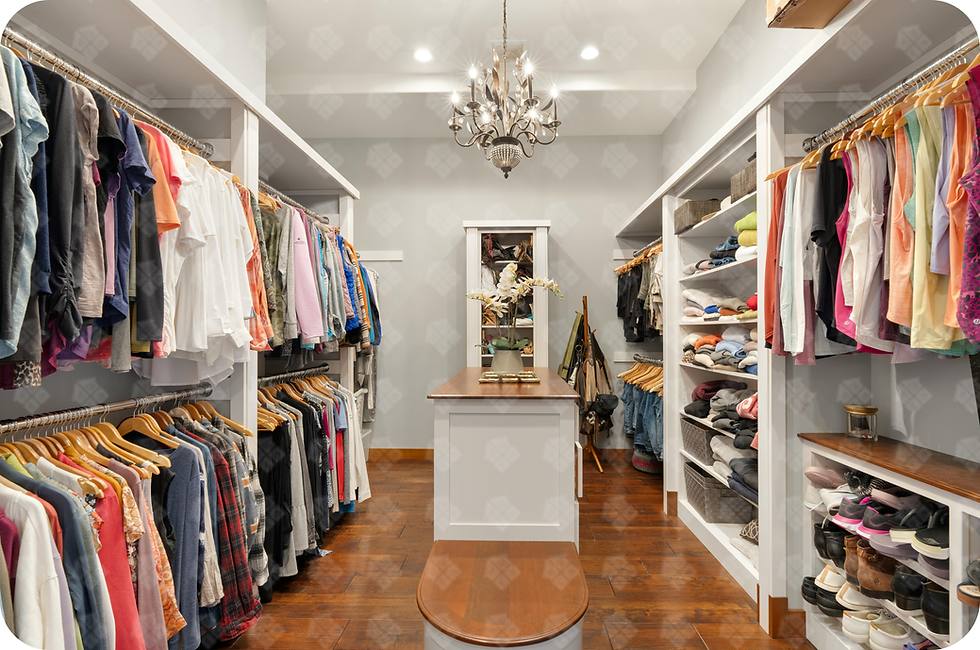
Have you ever felt that, even with a full wardrobe, you never seem to have anything to wear? Or that you waste time searching for clothes amidst the mess? If the answer is yes, it's time to rethink how your wardrobe is organized.
Organizing your closet in a functional way isn't just about aesthetics—it's a way to save time, simplify your daily routine, and even save money. And the best part: it's possible to do it simply and sustainably with a few practical strategies.
Why is it worth organizing your wardrobe?

A well-organized wardrobe:
It makes choosing clothes easier every day.
Avoid unnecessary purchases (you see what you already have!).
Extends the lifespan of parts.
It generates well-being and a sense of control over one's routine.
Step-by-step guide to organizing your wardrobe.

1. Empty everything
The first step is to take absolutely everything out of your closet. This allows you to see the actual number of items you have and sort them out more consciously.
Take this opportunity to clean the inside of the furniture with a damp cloth and a mild cleaning product.
2. Perform intelligent screening.
Separate the clothes into 4 categories:
It stays : you use it, you like it, and it's in good condition.
Repair : parts that need adjustments.
Donation : clothes in good condition that you no longer use.
Discard : old, stained or damaged clothes.
If you have doubts, ask yourself: "Have I used this in the last 12 months?" or "Would I buy this item today?"
3. Categorize by type and frequency of use.
Grouping similar clothes together makes organization and use much easier. For example:
T-shirts with t-shirts.
Pants with pants.
Keep cold-weather clothes separate from warm-weather clothes.
More affordable everyday items, party clothes on higher shelves.
Use boxes, organizers, and dividers to keep things tidy, especially in drawers and on shelves.
4. Standardize hangers and avoid excess.
Matching hangers create visual harmony and help to optimize space. Avoid hanging too many items on a single hanger, as this only creates clutter.
Prefer hanging items that wrinkle easily, such as shirts and dresses. T-shirts, pajamas, and gym clothes can be folded.
5. Create a maintenance system.
Organizing should not be a one-off event, but rather a light and ongoing routine. To achieve this:
Set aside 10 minutes a week to keep everything in its place.
Review your wardrobe with each change of season.
Avoid hoarding: if you buy something new, donate something old.
Conclusion

Organizing your wardrobe is an investment in practicality and well-being. When everything has a designated place and you can see what you own, your relationship with clothing changes—and so does your daily life.
With this step-by-step guide, you can transform your closet into a functional, beautiful, and easy-to-maintain space. Start slowly, one section at a time, and see how your routine will become lighter and more efficient!